
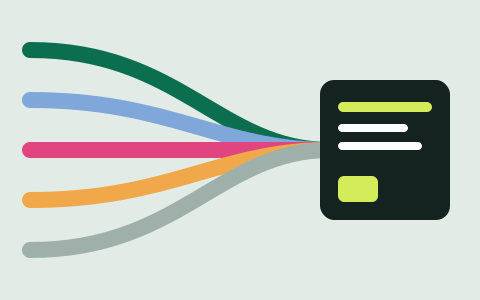
Five channels, side by side
"Digital marketing" covers every way an organisation reaches people online. Most activity falls into five broad channels. They differ in who controls them, how quickly they work and what they cost.
| Channel | How visitors arrive | Who controls placement | Typical time to effect |
|---|---|---|---|
| Organic search | Unpaid search results | The search engine, based on your pages | Weeks to months |
| Paid search | Labelled ads on results pages | An ad auction you take part in | As soon as ads run |
| Social | Posts, shares and social ads | Platform feeds and your own audience | Hours to days |
| Messages to subscribers | You, within consent rules | As soon as you send | |
| Referral | Links on other websites | Other site owners | Varies widely |
The time column is a rough description, not a measurement. Google's own starter guide says that some changes take effect in a few hours while others can take several months, which is a fair summary of how uneven organic search can be.
Organic and paid search
Organic and paid search appear on the same page, which causes confusion. They are separate systems. Paid results are bought through an advertising platform, are labelled as sponsored or as ads, and stop when the budget stops. Google's advertising help explains that ads are shown separately and labelled, and that payment does not buy a better position in the unpaid results.
That separation is useful to understand before buying anything. A supplier who says ad spending will "boost your SEO" is describing something the search engine itself says does not happen.
What organic search is good at
- Meeting people who are already looking. A search is a stated need. A page that answers it well reaches someone at the moment they want the answer, rather than interrupting them.
- Compounding over time. A useful page can keep attracting visits long after it is published, without a cost per visit.
- Supporting every other channel. People who hear about you on social media or in an email often search for your name before they act. Clear, findable pages help those visits too.
Where it is weak
- It is slow and uncertain. You cannot choose your position, and results can change when the search engine updates its systems or when other pages improve.
- It only works where people search. A brand-new kind of product that nobody knows to look for yet will get little search traffic, however well its pages are made. Awareness has to come from somewhere else first.
- You do not own the platform. The same is true of social feeds. Email is the channel where you have most control, which is why many organisations treat it as a complement to search, not a rival.
How much attention it deserves
There is no universal right share. A few questions help:
- Do people already search for what you offer or explain? If yes, organic search is probably worth sustained effort. If not, start with channels that create awareness.
- How soon do you need results? For a launch next week, paid and owned channels are the realistic options. Search is a longer project.
- Can you keep pages accurate and useful? Search rewards maintenance. A site that will not be updated is a weak base for any search plan.
Google's guidance on hiring an SEO makes a related point: good search work is often part of improving the site as a whole, and it takes time before its effects can be judged.
Worked example
A local repair shop finds that people regularly search for the repairs it offers, plus the town name. Organic search is a good fit: one clear page per type of repair, with honest prices and opening hours. For a one-day open event, though, an email to past customers and a social post will reach people faster than any page could.
Making channels work together
- Use the same name, description and claims everywhere, so a person who searches after seeing a post finds what they expected.
- Link social posts and emails to the best page on your site for that topic, not just the home page.
- Tag links in emails and social posts with campaign parameters so your analytics can tell channels apart. The measuring guide shows how.
- When paid ads reveal which wording people respond to, consider whether your organic pages answer the same need clearly.
Next: Search intent: writing for the question behind the query